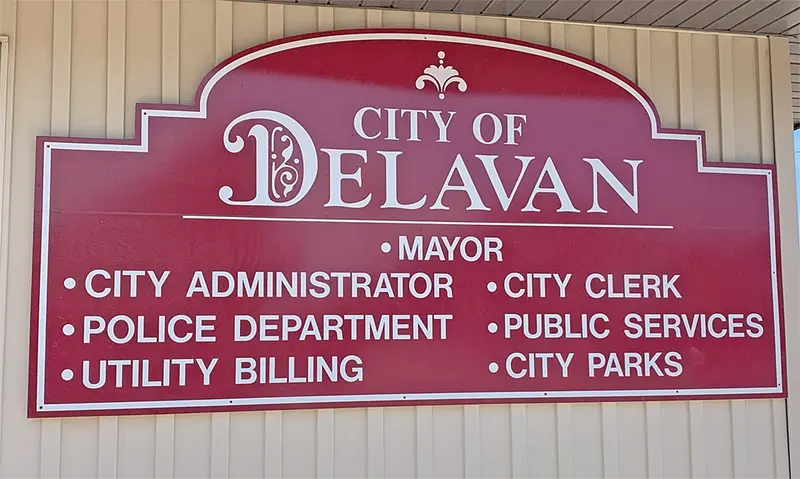
Council Passes Budget, Seeks to Fill $230K Gap
The Delavan City Council approved a budget for Fiscal Year 2026–27 on April 21, taking what officials described as an essential first step toward restoring the city’s long‑term financial health—even as the plan leaves a $230,000 deficit still to be resolved in the months ahead.
The spending plan, approved unanimously by all aldermen present (Alderman Douglas Bury was absent), follows several weeks of work with budget consultant Brian Baylor, the former city administrator for Hanna City. Baylor has been assisting Delavan as it confronts structural imbalance and declining cash reserves.
Baylor told the council that the budget represents meaningful progress toward stabilizing the city’s finances, with the goal of achieving a positive cash balance one year from now. But he also emphasized that the work is far from finished.
To help close the remaining gap, Baylor recommended transferring $15,000 from TIF funds to the Police Department and $150,000 from the water department to the general fund, moves he said would help align resources with immediate operational needs. Even with those adjustments, he noted that the city still faces difficult decisions.
Baylor reported that efforts to secure 5–6% spending reductions from city departments were unsuccessful, despite what he described as a genuine understanding among staff about the seriousness of the situation. “Hard decisions [lie] ahead,” he told the council, “but if you make the right decisions, there are better days ahead in the next 3–5 years.”
One option Baylor suggested for further discussion is the adoption of an additional 1% sales tax, which could help offset the remaining deficit and build a more sustainable revenue base. Following the presentation, Alderman Brent Nafziger requested that the sales‑tax proposal be placed on the agenda for discussion at the council’s next meeting.
While the approved budget does not fully resolve Delavan’s financial challenges, council members agreed that passing it now provides a necessary framework for the deeper structural work still to come. The coming months are expected to include continued review of departmental operations, potential revenue adjustments and further deliberation on how to position the city for long‑term solvency.
