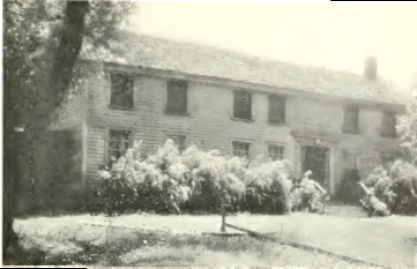
Before the Town Had a Name: the Story of Delavan’s First Colony House
Long before the grid of streets, the brick storefronts, or even the first family homes, the earliest shape of the Delavan settlement rose on a patch of high prairie at what is now the southeast corner of Chestnut and Third Streets. In May 1837, an advance party of carpenters and builders—led by W. W. Crossman—arrived to begin the work of turning a speculative Rhode Island venture into a functioning Illinois colony.
Their first task was survival. A small cabin went up quickly to serve as temporary shelter. But the real symbol of the settlement’s ambition was the structure that followed: the Colony House, a three-story frame building designed to house incoming settlers until they could build homes of their own. In a community founded on temperance principles and collective effort, the Colony House was meant to be both a landing place and a promise.
Constructing such a building on the open prairie was no small feat. Much of the lumber came from the East—some of it shipped from Providence, carried down the Atlantic coast, through the Gulf of Mexico, and then up the Mississippi and Illinois Rivers to Pekin. From there, the final 18 miles were made the hard way: by ox cart and wagon over rough prairie trails.
Other shipments originated in Pittsburgh, floated down the Ohio River before joining the same long route north. The heaviest timbers, however, were cut closer to home along the Mackinaw River, five miles to the north, and hauled across the prairie to the building site.
By early fall, two rooms of the Colony House were complete—just enough for Mrs. Crossman, the first woman to join the settlement, to arrive on October 1 after waiting out the earliest construction period in Tremont. Two more rooms were finished before winter, and the remainder of the building was completed the following spring.
Even in those earliest months, the settlers’ priorities extended beyond shelter. True to the ideals of the Delavan Association, cultural and educational needs were considered essential. Construction soon began on a schoolhouse, which served not only as a place of learning but also as a general meeting hall and a site for church services. It remained the community’s educational center until 1860.
Despite the ambitious vision of its organizers, the colony grew more slowly than expected. Few of the association’s enrolled members ultimately made the move west. Only five houses were built by the association itself, and the challenges of frontier life—limited transportation, distant markets, and difficult roads—kept growth modest.
Wagons and carts were the only means of travel, and the nearest village, Dillon, lay seven miles away. Pekin served as the primary outlet for produce, while the Orndorff settlement provided the nearest neighbors—and the nearest source of butter and eggs.
Twenty years after the land sale in Providence, the population of Delavan stood at just 150. By the time the community incorporated as a village in 1865, it had grown to nearly 500.
